Publicist Dumitru Remencu
"My father was a martyr. Everyone, however, judges the realities individually..."
(Excerpts from an interview with Sergiu Remencu, the son of Alexandra Remencu, director of the Children's House during 1929-1940)
Chisinau, which it seems we "know by heart", still hides whole textbooks of unused history. The green city on the banks of the Bâcul, in all times and for all generations, has been the cradle of many personalities, whose roots are deeply planted in the history of Bessarabia. I will mention only a few names: Maria Cebotari, Melita Pătraşcu, Gurie Grosu, Ioan Pelivan, Pan Halippa, Sergiu Niţă, Theofil Ioncu, Dmitrie Remenco, Elena Alistar... The idea of this column, the verbal history or the narrated history, was suggested to me by Tatiana Cistova, art critic, born in Chişinău, currently based in Moscow. Upon learning that the headquarters of our newsroom is located on Mateevici street, Tatiana exclaimed "I am related to Alexe Mateevici on the paternal line. You'd better talk to my father.... He knows the history of the city and of many people, who made the history of this city that I love so much... Ask my father about my grandmother, Alexandra Remencu, who was invited by the Pope to the Vatican...". Intrigued, I called Mr. Sergiu Remenco, who turned out to be a suitable interlocutor. This dialogue is far from complete, a large part of HISTORY about interwar Chisinau remained in my map. Someday perhaps I will collect these testimonies, documents of great value, in a volume of oral histories about our city. A story told about Chisinau, that part that hundreds of people have stored in their memory...
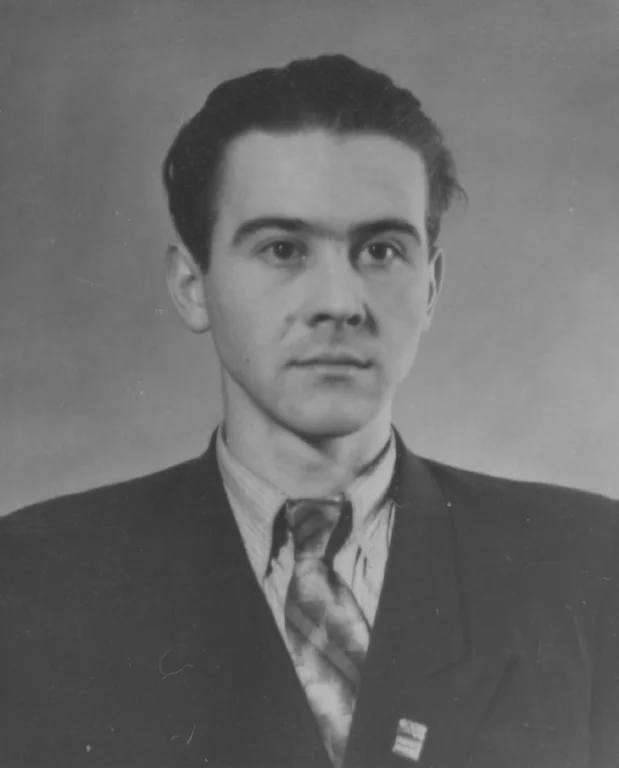 A.S.: - Mr. Remenco, you are among the few people who still remember the old Chisinau... I am thinking of a history of Chisinau told by those who were born here, who lived the history...
- You should talk to Mr. Ion Lisnic and Boris Diacenco, my first shooting instructor. I was eminent in this kind of sport, laureate at the ussr spartachiada, in two editions. Information about our family can be found in the press from the interwar period. But also in the volumes "Unknown Bessarabia", Encyclopedia "Women from Moldova". True, I still haven't managed to gather all the history of the Remencu-Scodigor family in one book.
- And your daughter, Tatiana, told me these days that she has an archive waiting to be used.
- Probably Tatiana could do this. To return to our family, you might be interested in my grandfather, Gheorghe Scodigor, my mother's father, who came from a generation of priests, from generation to generation there were priests. They were known in Chisinau. An article about the persecution of the Jews was published in a Hebrew newspaper, signed by Mr. Marinciuc. He remembers my grandfather, because he was then baptizing Jewish children left and right. Then, how can I tell you, our population was divided into two large groups. One group, from Vasa, was made up of the provincial Bessarabians, and another group they called the "conquerors from the Old Kingdom". Not long ago I met an old woman, who remembered the priest Gheorghe Scodigor...
- After you returned from the refuge in Romania, where did you study, at which high school?
- In the city at primary school no. 2, located above the republican stadium, on Bender Street. During the war there was a small church on the corner, today they are the University dormitories. Above is a building. In the building that was school no. 2. At school I was outstanding, I had an average grade of 9.33.
- When did you study in school no. 2?
- Between 1942-43. Then, in 1943-44, I studied at the "Haşdeu" High School, the building of the current History Museum. It was a very prestigious high school, an extraordinary competition that I passed, and after the first year we all went to Romania.
- After the war started?
- Not when the war started, I left in 44.
- Where did you settle in Romania?
- In Găiesti, northwest of Bucharest, about 70 km, between Pitesti and Târgovişte. There I did the second grade of high school and the external exams for the third grade. The brother had remained in Bessarabia, he was enlisted in the Red Army.
- Your brother who remained in occupied Bessarabia, what was his name?
- Gheorghe Remenco, in honor of his grandfather.. He was the president of the Association for the protection of historical and cultural monuments, he founded the association. Gheorghe was a fighter. He brought many monuments back to life: Donici's mansion, this is my brother's work. He did many good things. With the churches, it was an interesting case. During the famine, in 1946-47, I don't know how some Moldovans ended up in Moscow, they went with the idea of meeting Stalin. They did not reach Stalin, but their request was sent to the dictator and Kosighin arrived in Chisinau. My brother then worked at ATEM, so he was among those who welcomed the delegation. Kosighin did not take a step through the city, he asked my brother to accompany him through the republic.
- Yes, someone else told me about that visit by Kosîghin. Is it true that the famine was stopped as a result of that visit?
- Know that the situation has calmed down. As he was leaving, Kosîghin said to his brother "if you happen to need me, write to me". And they agreed how to send the letters, so that they reach the Russian dignitary. That address has only been used once in its life. In 1960, after a strong earthquake, many churches suffered serious damage. Ion Gudă categorically forbade the distribution of one gram of cement for the restoration of churches. Definitely, nothing for churches. Then the brother wrote a letter to Kosîghin, explaining that the churches make up our national heritage. He received a personal answer: "Material problems, we will see them from the Soyuza reserve". A scandal followed, he was called to the police station, Ion Vodă cel Cumplit made a fool of him... After that incident, Gheorghe never got out of bed... They made fun of him and ... he died very quickly. It was his last action. My brother was a great patriot, but the regime defeated him, times were complicated.
- Mr. Remenco, I read somewhere that Florica Niţă supported your mother very much in the activity of the Children's House in Chisinau, an institution that was a benchmark for the entire country during the interwar period. Sergiu Nita, Florica's husband, was the representative of Bessarabia in the Government of Romania. In what degree of kinship were you with the Nita family?
- Sergiu Niţă was my grandmother's brother, on the maternal line. Sergiu got involved in politics at the beginning of the century. He was eminent in politics, he earned the friendship of King Ferdinand! Not everyone was honored with such relationships. The king counted him among his best friends. Sergiu and Florica Niţă baptized me, in honor of my uncle they named me Sergiu. Somewhere in the archives, the baptism certificate disappeared. Vasăzică, my godfather was minister of Bessarabia three times in the Romanian Government, a kind of governor of Bessarabia. Sergiu Niţă has great deeds to his credit: he was the initiator of the erection of the monument to Stephen the Great, he organized the financing, he became involved, he negotiated with the sculptor Alexandru Plămădeala... King Ferdinand was present at the unveiling of the monument, personally invited by Sergiu and for two or three days while he was in Bessarabia he lived in the house of the Niţă family.
- Where was Sergiu and Florica Nita's house?
- On Lazo street, above Ştefan cel Mare, if you rise higher on the right side. The house is no longer left, they demolished it. I barely remember him, vaguely. I was little then. And I don't know Aunt Florica at all, because she died the year I was born.
-Where did they baptize you, at which church?
- My grandfather Gheorghe baptized me at the "Adormirea Maicii Domnului" church, it is still the church today, on Bulgă str., the upper part towards Mateevici, near Kogălniceanu. My baptism took place in 1933! My grandfather was very honored by the parishioners, he was the only priest who officiated the Holy Liturgy in the years 1940-41. The Soviets came, all the churches were closed and he was in a lot of trouble, but he did the job. As long as I remember him, as long as I knew him in all his deeds, I consider him holy. Of course, my mother is also of Romanian origin, she had a selective education in the family, in everything she was a very great patriot. My grandmother's name was Nadejda Nita, Sergiu Nita's sister.
- And how did your father, the publicist Dumitru Remencu, end up in the house of priest Gheorghe Scodigor?
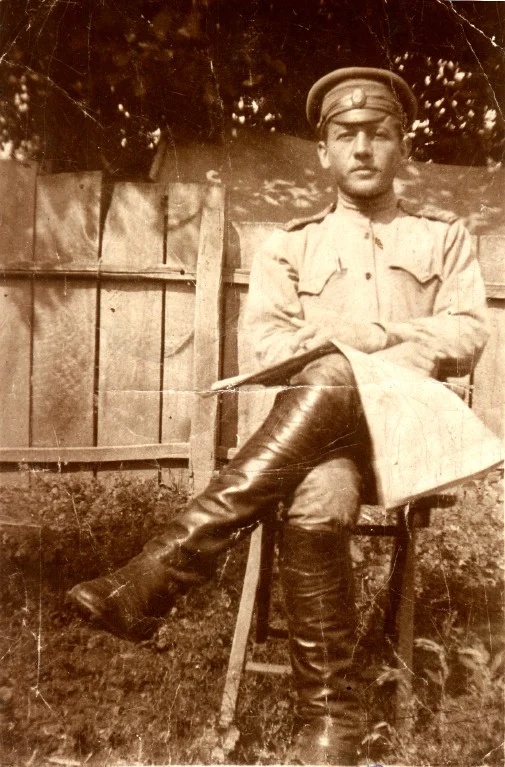 - Father was originally from Bolgrad. During the war he was in the army, he had trouble and had to delete it from there. And, in vain, he ran uphill, towards Chisinau. Why? Because he had acquaintances here. The family was related to Mateevici, there were still some relatives in Orhei. He had fled Bolgrad and needed documents. He was very strict then, he was a Russian officer, he was in the war. Dad was a bit clumsy, red-faced. Sergiu Niţă organized the preparation of the documents. During that time he went to my grandfather, who was a priest at the church in Cioreşti. Everyone supported and helped him. And...as a sign of gratitude...he took her daughter from the house, the second daughter, whose name was Alexandra, my mother.
- Beautiful. But did the father speak Romanian?
- Yes. Sure. Perfectly Romanian. Dad was a writer, a respected intellectual. Good friend with Father Vasile Ţepordei. And with other great people of Bessarabia. After the arrival of the Russians, everyone left the city, the front terrified us, we were afraid. Our relatives were subjected to repression... On July 13, 1940, my father committed suicide. The NKVD made fun of him, during a week they called him at night 4-5 times. Dad couldn't resist and on July 13, two weeks after the great liberation, he shot himself. Anyway, they would have taken him to Siberia and destroyed him there. I saw some materials, with such accusations... there was no way they would let you live. My father was a publicist, well-known, highly regarded man...
- But where was your father published?
- He officially worked at two Romanian newspapers, "Timpul" and "Astra", at "Viata Bessarabiei". But he collaborates with many newspapers.
- Mention the name of the priest Ţepordei... Did you know him?
- Dad spent it at the train station, then in the 40s. I was also with them. And on the last night, Tepordei was with us. They talked all night. And we spent the next day on the train together. A phrase uttered by Țepordei remained in my memory: "Dmitrii Ivanovich, odin shag, sdelai odin shag"... And the train left.
My father was a martyr. But each man appreciates as he understands, each man judges individually from everything he has been.
- Mr. Remenco, let's go back to the degree of obedience with Alexie Mateevici.
- Alecu was my aunt's son. Her name was Sofia. You have it in the picture.
- Are they related on your brother's line?
- Yes, my brother Gheorghe, the one who was the founder of the Monument Protection Association.
- Mr. Remenco, but how was your life after the arrival of the Russians?
- The first thing after father's death, thank God, they left us alone. Know that they were careful to make a good impression, the supply was good.
- But what were they saying about your father, where is he?
- That's right, I wasn't asking. Dad came late at night, he worked a lot. The first days of Easter gave us a great search the nkvd. And all the materials that were uploaded and disappeared without a trace. After that, a day or two later, a new director came, and they kicked us out, they threw us out of the house, we stayed with Iulia Kveatkovski for a few days. This was the head of the Essers. Her brother was hanged along with Lenin's brother. During the revolution, they took refuge here, in Chisinau. She rented the eye clinic, the ward of the children's hospital. I stayed with the Kveatkovski family for a few days, but a week later they also kicked her out of the house. They took his house and he was living in a barn.
- Strangely, the witnesses who passed through the orphanage are becoming fewer and fewer, yes the building is still standing today. Do you pass by there often?
- Not long ago I went, the rector of the institute invited me, I went through all the rooms. Too heavy emotions... Our house had two levels, with two columns at the entrance, with a very nice staircase to the second floor. The staircase was made of marble, very wide, so that it was convenient for the children to go up and down. I'm very glad that they restored it and that it got its former appearance, only that they changed the railing. When I stepped on it and felt its vibration, it was as if I had returned to those times. On the second floor were the girls' bedrooms, the classrooms, equipped so that various activities could be organized. The school also had a church, it was in the right wing of the building. It had a miniature altar with a pulpit. Services were held on Sundays. We would get up in the church, listen to the service, then go downstairs and eat. My father was still there and talking with the priest. The church was also visited by the townspeople who lived near the orphanage. I remember that in front of the building, under the windows of the little church, there was a small belfry where the bell was rung. I can hear it now...
- Mr. Remenco, you have an enviable memory! Thank you for this precious information about the ancient people of Chisinau. It was a great joy to dialogue with you. You must write a history of the Scodigor-Niță-Mateevici-Remencu family... We will wait for it.
Antonina SăRBU spoke
In photos:
- Sergiu Remenu
- Dumitru Remencu