Orphanage of European size
In the 1930s, Chişinău was the best orphanage in Europe
Бессарабцы на фронтах Первой мировой
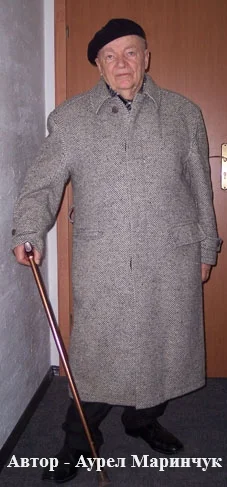 In the fall of 1916, Bessarabia became a front-line province. Until then, our countrymen fought and died on the fields of Galicia. Tens of thousands of Bessarabians dug in behind the Siret river. Their fathers became volunteers in army camps. They took provisions and shells there, and vice versa - graves and wounded. Hundreds of senior high school students became nurses. And dozens of Kishinev gymnasiums were transferred to the disposal of military departments under headquarters and hospitals before the end of the war.
The front stabilized. There were positional battles. The most brutal battles were fought around the town of Mereseshty.
Two heroes of our story met there: the priest Alexey Mateevich and the young officer Dmitry Remenko, the son of a Bulgarian notary. Father Alexey, in the rank of a temporary regimental priest, encouraged the soldier for his military feat and sang the funeral. Front life brought these two earthlings together. A strong friendship arose. The young officer Remenko was fascinated by theology, he dreamed of becoming a philosopher. Later, ten years later, he headed the religious journal "Raza", and was a well-known church journalist. Until the end of his days, he thanked fate that he was close to the poet Mateevich.
Once, after philosophical disputes, Father Alexey asked the young officer: « Why are you not married? By the way, у меня на примете есть для тебя замечательная партия Александра Скодигор, daughter of the priest of Chisinau, the venerable Ilyinsky Cathedral. She is now finishing the mathematics faculty in Odessa».
Directress Madam Skodigor-Remenko received Pope Rimsky
Баламутный 1917 год soon began. There was a temporary truce at the front. Mateevich returned home, where he contracted influenza and died in August 1917. And Remenko, having found himself in Chişinău, looked for the same Alexandra and soon married her. In 1919, they had a son, George, and in 1933, a son, Sergey, who was my university colleague and lifelong friend.
The fate of the Remenko spouses turned out like this. Former officer Dmitriy entered Yassky University, became a journalist and headed the magazine "Raza". And madam Aleksandra Skodigor-Remenko's career was absolutely fantastic. She became the director of the children's boarding school, which was located at the end of Kogelnichanu street (formerly Pirogova). There is the court of justice. In the boarding school, study, work, family atmosphere and intellectual education were combined.
At that time, there were several million war orphans in Europe. The organization of shelters was taken up by the League of Nations. Madame Maria Montessori was responsible for this case. She came to Chişinău in the late 1930s to find out how shelters are organized. She was convinced that Madame Remenko organized the best shelter in Europe. And Remenko was invited to Rome, where a seminar was organized on raising children in boarding schools on the example of Chisinau.
The director held meetings with European colleagues, inspected boarding schools in other countries, shared her experience. Pope Pius IX himself invited her. In Chişinău, as in all of Romania, Alexandra Remenko immediately became a celebrity.
Clan of teachers and priests
To understand this career growth, we will have to introduce more actors into our story.
Around 1890, the seminarians Nitse from Peresechiny and Skodigor from Chichuen studied and became friends in the Chisinau spiritual seminary. Later, both had eight children. Для украфления другбы two daughters of Nice married two brothers of Skodigor. One is the mother of the aforementioned Aleksandra, and the other is for the director of the real high school mathematician Iona Skodigora. As a result, a huge clan was formed, consisting mainly of teachers and priests.
The father of the Nice family made friends with another future celebrity during his studies at the seminary - high school student Kontantin Stere. This rebel and writer, traveling along the Soroki-Kishinev route there and back, always stopped at the seminarian's family in Nice. After sitting in Siberia, Stere came to Yassy. He studied there, and later became the rector of Yasskogo University.
King Ferdinand I stayed in Nice House
At the beginning of the XX century, Stere convinced the father of the Nice family to send his son Sergei to Yassky University. There, Sergey met the daughter of the lady-in-waiting of the Romanian queen, Elizabeth. He married her. After 1918, his wife Florika Nice founded a women's pedagogical seminary in Chisinau, which at one time bore her name and was located in the premises of the current Ukrainian Lyceum. Sardzhiu Nitse himself became a member of the Council of Ministers and once was the minister of Bessarabian affairs.
To understand his weight in society, I will give you a fact. Around 1925, King Ferdinand I visited our city to get acquainted with the project of the monument to the sculptor Stephen Plamedyale. Остановился корол в сержиу Нице - the second house on Sergey Lazo street from Stefan cel Mare boulevard. There were still two gymnasium directors in the family.
The best teacher of Chişinău hanged himself after interrogations in the NKVD
On July 27, 1940, the city's intellectuals gathered at the cathedral. They reasoned – how to be: run or stay. Со слов моих друзей Georgiya and Sergey Remenko, as well as another university classmate, Sergey Radautsana, there were Stefan Dobynde, И. Parno, Alexander Oatul, brothers Ion and Mikhail Skodigor, Dmitry Remenko, Boris Lazo (brother of Sergey Lazo), Vasile Tsipordey, Ivan Radautsan, former mayors of Kozhokaru and Alexander Sibirsky, lawyer Sergey Sibirsky, former deputies of the Tsar's Duma brothers Krupensky. И еще пара сотен людей, чи намилии мне ничего не ворат.
«Why should I leave my home?», - asked former director Oatul. «Я был педагом при tsarisme, при румынских властыха, буду ребят и при советах учить!».
"You don't know what kind of beasts you'll be dealing with, at best, go to the woodcutter in Siberia", - said priest Vasile Tsipordei. And here he went to the train station, where he got on the train and left.
The rest of the listed persons remained here - "to fulfill their debt", as they spoke.
However, only two survived - mathematician I. Parno and physicist St. Dobynde. Yes, he is also the brother of the revolutionary Boris Lazo, who was released to Romania in the autumn to reunite with his family.
The Soviet organs were first occupied by the State Duma deputies and the Council of Tsars. Then the whole week they smiled right and left. Students were given candy, colored pencils. On July 10, they took it seriously. Alexander Oatul, who was the pride of intellectual Chisinau, was summoned to the NKVD, and they asked him only one question: «Why did you stay? Who are your accomplices?» During the day they let you go, and at night they tormented you with questions and beatings.
The former director, Oatul, could not resist the taunts, and on the morning of July 12, he took it and hanged himself.
Полчаса на сборы. But where are you going?
His son ran with this sad news to the Remenko couple. And the journalist Dmitry just received a summons for another interrogation. On the morning of July 13, 1940, he returned home completely demoralized. He went to a cousin. He tricked the one who, he said, wanted to go hunting for quail, and asked for a hunting gun. He returned home and shot himself. It was July 13. His wife and Serezha, returning home, found the head of the family in pools of blood.
Soon the soviet militia also showed up. Neighbors, colleagues and relatives gathered. The policeman gave a policeman to the gathering and told the director of the boarding school to clean the room. Poor Madame Alexandra fainted. Сережа, ему было невять лет, saved the presence of the spirit. He collected his clothes, photographs, documents, picked up his mother, and they left that house forever.
Но куда деватся? Пойдем к тете Юле, продажа Сережа. The acquaintance turned out to be a well-known ophthalmologist. Юлия Квятковская in her youth she was an active narodnitsei. She went to the people, treated, gave advice. And her brother was a populist, known throughout Russia. He was hanged for the same reason as Lenin's brother. Now, do you hear the scale of heroes of my story?
After a couple of days, the ubiquitous NKVD officers came to Kvyatkovskaya's apartment, where Mitpropolia is now located, and drove everyone out: "What is the gathering of enemies of the nation? March from here!".
Now both poor women wandered in search of refuge.
How the teachers saved the Kishinev Jews
Another detail. In the summer of 1941, the Jews of the city found themselves in the ghetto, i.e. in the perimeter of streets Pavlovskaya, Irinopolskaya, Armyanskaya and железной дороги. Reasoning that even more difficult days are ahead, some mothers sent their young children to peasant families. For greater fidelity, these children were baptized. Our ladies - Alexandra Skodigor and Yulia Kvyatkovskaya, a teacher and a doctor, picked up Jewish children, took them to the father of Madame Aleksandra Skodigor at night, baptized them secretly and sent them through their channels to village childless families. Once Serezha Remenko introduced me to such a former Jew who became a teacher at the Kagul medical school...
Revaka-Sibir train
А вот еще судьба. Brothers Ion and Mikhail Skodigor, uncle of Madame Remenko, on July 13, 1941, were passengers on the train that followed the Revaka-Siberia route. After a week of terrible hunger, Lyceum director Ion Skodigor died.
There were four to six corpses in each wagon. The train stopped behind Chelyabinsk. All the corpses were buried in the forest strip. Mikhail Skodigor watched this ceremony from the next car. He told everything in 1957, when he returned from Siberia. I got permission to go to Romania and reunite with other family members.
Former mayor Alexander Sibirskiy still left for the West in 1941 and 1944. He changed his surname to Kostinescu, and his traces were lost. And his brother Sergey Sibirsky was arrested immediately, then released and arrested again on July 22, 1941 and shot in Orhei. His son, the mathematician Konstantin Sergeevich, married Aurika, the sister of my wife Sandy, and only 20 years later he told us the family history.
After the war
Sergey Remenko invited me to his home sometime in the spring of 1951. The house was on Prunkului Street, behind the A.S. Pushkin Museum in Chişinău. After the sad vinaigrettes of the university canteen, I got acquainted with Madame Aleksandra's homemade borscht. At the end of the series of meetings, Sergey Remenko told a bunch of stories from the life of the Kishinev society. Including the fact that thanks to the poet Alexey Mateevich, another funny wedding took place. The poet married his cousin Sofya to Viktor Remenko, the journalist's brother. This guy didn't try his luck and went to Romania instead of Siberia.
Around 1960, I visited Sergey's house on Prunkuluy street. A lady was washing in the yard. I said hello, and she answered with a strong Transylvanian accent. This was Mateevich's cousin. Они по паспарту - Matvievich.
Sergey Remenko was the champion of the republic in pistol shooting. Yes, even the most famous radio amateur in the world. His collection of radio postcards was calculated by many hundreds of illustrations from all over the world – England, China, Mexico. He had the impudence to fall in love with the most beautiful girl in town. She was the professor's daughter. And the mother-in-law turned out to be quite harmful. After the birth of the child, the daughter lives somewhere in Spain, the mother-in-law drove her daughter-in-law out of the house.
Our common colleague and friend Sergey Radautsan, becoming the head of the laboratory at the academy, arranged for Sergey to stay. During 50 years, Remenko was the best universal experimenter. He had a lot of deep scientific ideas. He distributed them right and left.
The second marriage also broke up. My son from the second marriage, Dima, was my student. You look at him - and you feel the aristocratic breed.
Around 1968, I was the dean of the electrical physics faculty at the Polytechnic University. I met Sergey and I asked: «Did you finish something? У тебя есть diploma?»
«Yes once! I don't need it!", said my friend. «Пошли к Радауцану!», - I said.
And he was then the rector of the institute. Zashli. «Here, brought our shalopa. We will break him together, but we will stop him from completing the education». Radautsan raged: "Here, collect in one folder all the articles on physics of semi-conductors, put together a diploma work". Then he turned to me: «About 10 subjects have accumulated there – the difference in the school plan. Ты декан или кто? Liquidate this difference as you know! Не мне тебя учить!".
How did you come up with the idea of naming the street after Floriki Nice
My friend Remenko died at the beginning of October 2011. He was buried next to his spouses Florikoi and Sergiu Nice. Sergey Remenko was a city council deputy in 1990-95. At his suggestion, Floriki and Sergiu Nice streets appeared in the circus district. В комитете по переименованию улиц его просили: «Кто эти люди, октуда ты их технишь?» He answered: «Как мне не знать. Они меня крестили!».
Georgy Remenko was the deputy chairman of the society of protection of the MSSR. The chairman was some bonza from the Central Committee. Naturally, the chief did nothing. All work lies on Georgiya's shoulders. There was a community in one of the rooms of Shchuseva's house-museum. А я жил 22 года натрадый, в доме №80.
All the former chief architects of the city gathered there: neighbor from house №78 Valentin Mednek, Valentin Wojciechovsky, originally from Sorok, friend and colleague – both of us were deans at the polytechnic, Robert Kurtz, also associate professor at the polytechnic. Сергей introduced me to Georgiem, and he introduced me to architects. It was a pleasure to listen to them. The stories of streets, houses were discussed. А главное - they remembered Chisinau celebrities. It's a pity that all the information is lost for an age. That's why I'm writing these lines - to save at least something.
Paradoksy epokhi
And for dessert, one more fact. If it seems to you that I have extracted a few celebrities from the past, I will remind you that in August 1940, at a meeting of the Supreme Soviet of the USSR, in the presence of Stalin, a certain teacher from Orhei, named Krechunesku, asked to include the Moldavian Republic in the USSR. Так вот, Georgy Remenko married Valentina Krechunescu, the daughter of that historical teacher...
Pravda, it turned out to be a completely paradoxical combination of personalities?
And now it's quite a paradoxical case. In 1938-40, as a primary school student, I studied in the village of Kriškautsy, Sorokskogo uyezd, and sat at the same table with the boy Kostika Foamete, the grandson of our teacher.
He became the famous monumental sculptor of Romania, encyclopedias write about him. А наш писатель Юрий Колесник не может найти следов этого бессарабца. It turned out that in the 43-44 school year, this Kostike sat at the same desk with Sergei Remenko in the Chisinau lyceum named after B.P. Khazhdeu. Maybe readers will help to trace the sculptor?
Если вы просите, why we need stories of other people, то ответ мой будет такой. "Humanity learns from stories about the life of other people", said Krzysztof Zanussi, a famous Polish film director.
Aurel MARINCHUK,
Associate Professor at the Polytechnic University