Behind the scenes of history
THE PULSE OF TRUE HISTORY...
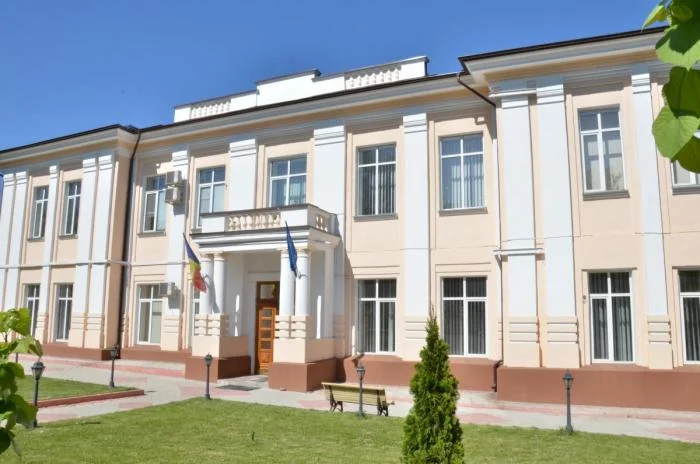
Houses have destinies similar to those of people. The political regime defines their fate.
The large and beautiful house on Serghei Lazo str., 1 (formerly Nemțeasca str.) was designed during the First World War. The great world conflagration brought great suffering, tens of thousands of children lost their parents. Someone had to take care of orphaned children, so it was necessary to build an orphanage in Chisinau. In 1916, the project was approved and the construction of a two-level edifice was started, intended to house two schools for orphans: one no. 1, for boys and no. 5, for girls.
The Second World War did not spare the building, which was repaired after the war and was used as an administrative building for various institutions. Here were the offices of the "Literatura artistică" publishing house, until 1989, as well as the Veterinary Faculty of the Agrarian University of Chisinau.
Since 2007, the building is under the management of the National Institute of Justice. The names of today's forgotten personalities are linked to this building, such as Nadejda Terlețki.
О DIRECTORIES LIKE MANY OTHERS…
The 19th century changed a lot the position of women in society. From her simple presence in the family, she changes her place in society through her presence in social life. The change of accent was made through school. Schools for women were opened, they in turn started to open other schools of different levels and in this way a peaceful revolution, but a necessary revolution, took place.
A perfect example that illustrates this case is that of Nadejda Terleţki. 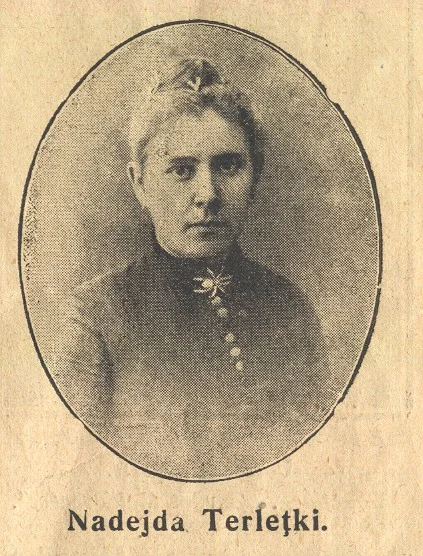
He was born in 1870, in the village of Zarojani, Hotin county. Her parents sent her to study in Chisinau, where she graduated from Girls' High School no. 1.
Following the fashion of the time, as thousands of young people did back then, she went to work for the enlightenment of the people. She accepted to be a primary school teacher. He did pedagogy with a lot of dedication and sacrifice. Between 1917-1925 she was the director of Primary School no. 5 from Chisinau and many generations of children passed through her hand, enlightened by her pedagogical grace and exceptional soul culture. He participated in teachers' congresses in Russia, where he fully asserted himself through his gift of oratory and a vigorous publicist talent.
But the area of his concerns far exceeded the boundaries of the school. He collaborated fruitfully with Daria Harjevschi in the organization of a popular theater, in the presentation of interesting public readings, etc.
He was a man of risk. And probably the most interesting biographical nuances will be discovered in the still secret files of the gendarmerie in Bessarabia. Her house served as headquarters for the newspaper and magazine Moldavian word (1913-1917), edited by Pan Halippa and Nicolae N. Alexandri. She was the lifelong friend of the distinguished thinker and publicist Nicolae N. Alexandri (1859-1931). And to a large extent, the harmony of this friendship explains many of the actions of the publicist N. Alexandri. She was never a stranger to human pain, to the suffering of her neighbor and, guided by the perceptions of Christian morality, she got involved in problems that did not concern others, but which, by virtue of the functions exercised, should have concerned her in the first place. Without expecting laurels or praise, he was concerned with the fate of the Transnistrian refugees.
He died modestly and dignified as he had lived. She was buried at the Central Cemetery in Armeneasca Street, but to our great misfortune, no sign was preserved, no plaque on which the year of death was written. That is why we are looking for information about Nadejda Terletski. Because this Bessarabian personality must be known and appreciated according to merit. Just as the Remencu family's connection with the edifice on S.Lazo str., 1 should be known.
A FAMILY AS AN ANTHOLOGY OF PERSONALITIES
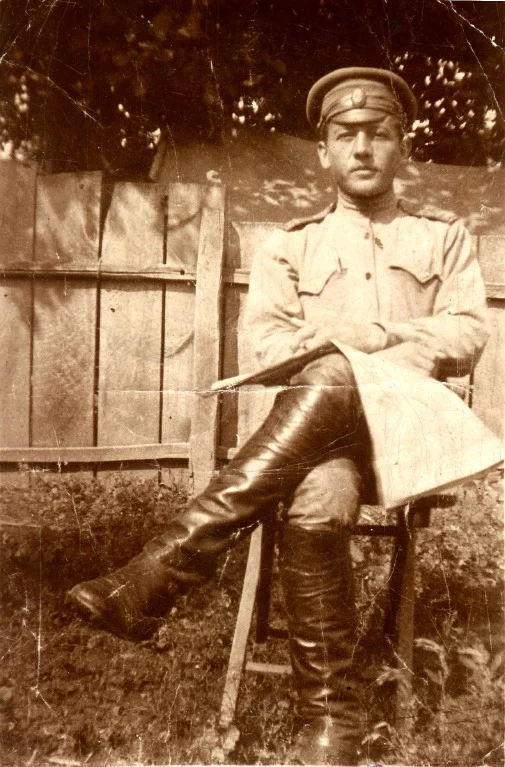 His biography Dumitru I. Remencu (1895, Bolgrad – 13.VII.1940, Chişinău), would be an ordinary one of a Bessarabian intellectual, if there were not some moments, or better said some accents, that take her out of the ordinary.
Journalist and philosopher, he was looking for his place in society. In order to define his state of mind, he accepts advertising – an intermediate condition. Philosophy, i.e. meditation, being the supreme flight of the spirit and thought and "... fulfilled its original purpose: to find a common line between the specific Bessarabian conception and the Romanian social ideology" (Henrih Bloch).
And what distinguishes him from other intellectuals is the fact that he was aware of what he was doing, of the responsibility for every moment lived. The moment the crude, everyday event collided with his philosophical concept, he ended his life cycle...
Only the truly wise can do that...
He completed his secondary education in Bolgrad, where his father was a notary, and the University of Odesa. Since 1919, he has been a student at the Faculty of Letters and Philosophy of the "Al. I. Cuza" University in Iasi. During the interwar period, he was intensively active in the Bessarabian press, collaborating with newspapers Moldavian word, Raza and at the magazine The life of Bessarabia. He is the newspaper's special correspondent for Bessarabia time and of the magazine Argus, which were published in Bucharest. He died tragically on July 13, 1940, when after being investigated by the NKVD bodies and insistently forced to denounce his friends, he returned home and shot himself...
In Chisinau he lived on Sciusev Street, between Puşkin and Mitropolit G. Bănulescu-Bodoni streets. Then he settled in the premises of the Orphelinatu, from where he usually went to the editorial office The Moldavian word which had its headquarters on Regele Mihai str., corner with bd. Alexandru, or on 142 Haralambie str., at Life Bessarabia. The eclipse of his life occurred when he was called to the NKVD headquarters in Sinadino Street, to give statements about former colleagues and friends. He came home and shot himself. He was buried at the Cemetery on Armeneasca Street.
ANOTHER DIRECTORY OF THE ORPHANAGE
Dimitrie's wife, Alexandra Remencu, was a prominent personality. 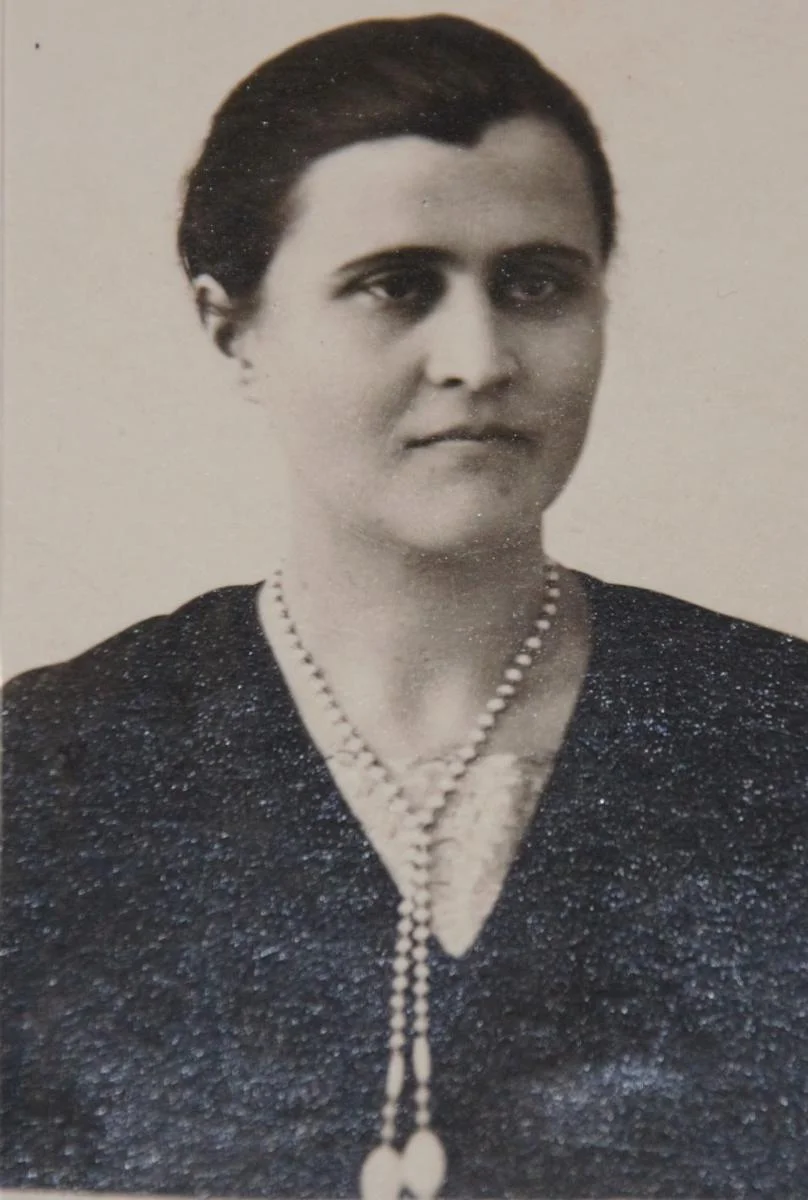
Researcher, Dr. Maria Danilov in the encyclopedia Women from Moldova (Chişinău, 2000) gives an accurate portrayal of yet another member of this distinguished family:
"REMENCU, Alexandra (30.VIII.1897, Peresecina village, Orhei county – 19.V.1959, Chişinău, Central Cemetery), pedagogue, prominent personality of public education in Bessarabia, the interwar period.
Studies: Girls' High School in Orhei (1915), University of Odesa (1915-1917), specialty – mathematics.
Descended from a family of priests (born Scodior) from Bessarabia, mentioned as luminaries from the second half of the century. 19th in N. Popovschi's book The history of the church in Bessarabia in the 19th century. In 1918, she married Dumitru Remencu (later, a well-known journalist and publicist). Mother of Sergiu and Gh. Remencu.
She was a teacher, head of kindergarten (no. 17) in Chisinau. In 1929, at the suggestion of Florica Niţă, she was appointed director of the Orphelinat (later - Casa Copilului) in Chişinău. The Children's House became, in 1940, a model orphanage for the whole country, visited by a special commission of the League of Nations (1938). The leader of the commission, Montessori, proposed that the experience of this orphanage be presented at a special congress, which took place in Rome (1938). The theses of the report, presented at the congress by Alexandra Remencu, were included in the final stage, as recommendations. In the same year, she was invited to the Vatican, where she was received by Pope Pius XI.
She stopped her teaching activity in June 1940. Following the persecutions of the NKVD, the husband committed suicide (July 13, 1940), the family was thrown into the street (the same day - Iu.C.)). In 1944, he took refuge in Romania. He returned to Chisinau in October 1945."
She managed to give a special weight to the activity of caring for and educating orphaned children, becoming a model on a European level.
CHILDREN FROM THE REMENCU FAMILY...
A book can be written about these children who grew up in the environment of the Orphanage.
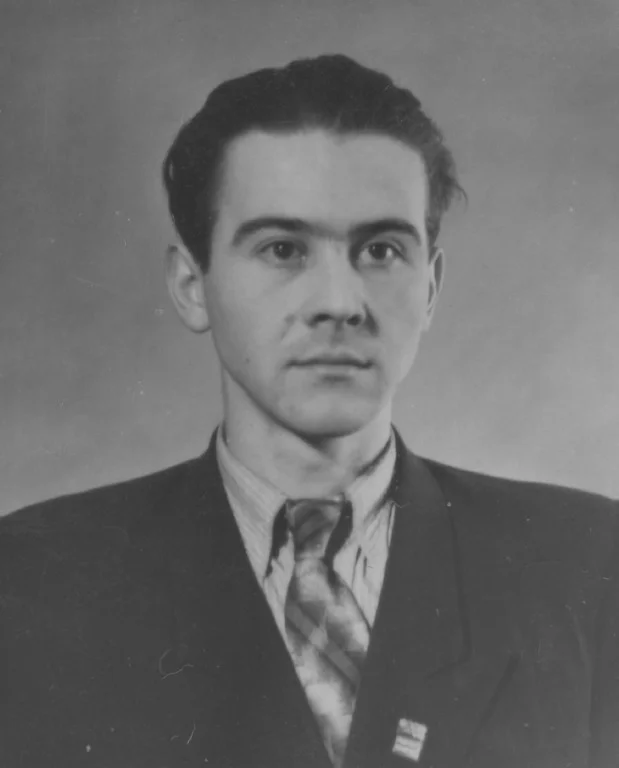
Gheorghe REMENCU (19.XI.1918, Chişinău – 29.X.1977, also there), Dimitrie's son, was also a journalist. Probably the family tradition imposed this profession. He graduated, in 1938, from the Boys' High School "Al. Donici" in Chisinau, then studied for two years at Faculty of Letters and Philosophy of the University of Bucharest. The war comes, the occupation of Bessarabia and that's why he gets his higher education diploma studying at the "I. Creangă" Pedagogical Institute in Chisinau.
The area of his activity is diverse, from the electronic press to the traditional one. He worked at the Radio and Television Committee, at the ATEM Press Agency, at the newspaper The culture of Moldova, at the Society for the Protection of Historical and Cultural Monuments, preferring to collaborate with other publications that were committed to promoting the theme of culture. He had a hereditary passion for the past, for those unseen bells of the nation's destiny that ring together reminding the duty of a people's memory. He held the position of vice-president at the Society for the Protection of Historical and Cultural Monuments.
He wrote and edited some books burdened with feelings and respect for everything that can constitute our cultural treasure: The lark chirps (about the singer Tamara Ciobanu), Through Chisinau in the past and today (Chisinau, 1966), To the heritage of the beautiful (Chisinau, 1970), Our treasure – the monuments (Chisinau, 1977).
He left several manuscripts and many notes. His creative plans were big and that's why they remained unfulfilled...
his brother Sergiu Remencu (1932 – 2011), he was an engineer, with studies at the Faculty of Electronics and Automation. An avid radio amateur and collector, he owned a treasure trove of postcards from all over the globe. Champion of the RSSM in shooting with a pistol, he was a municipal councilor in the turning year of 1990, being a member of the Street Renaming Commission, as a native and resident of the former Chisinau.
This information is just a small part of the secret history of a house in Chisinau, which the townspeople walk past every day without feeling the pulse of true history...
Iurie Colesnic
In pictures:
- The house on S. Lazo str., 1, INJ headquarters
- Nadejda Terletski
- The officer and philosopher D. Remencu
- Alexandra Remencu
- Sergiu Remencu